Jaggo | ਜਾਗੋ | जागो
A traditional pre-wedding night celebration in Punjabi weddings, marked by music, dance, and community participation.
Introduction
Jaggo is one of the most lively and energetic pre-wedding traditions in Punjabi culture. It is usually celebrated on the night before the wedding and involves music, dance, and collective celebration.
The word “Jaggo” means “to stay awake” or “to awaken,” symbolising the act of gathering people together to share joy and announce the upcoming wedding.
What Is Jaggo?
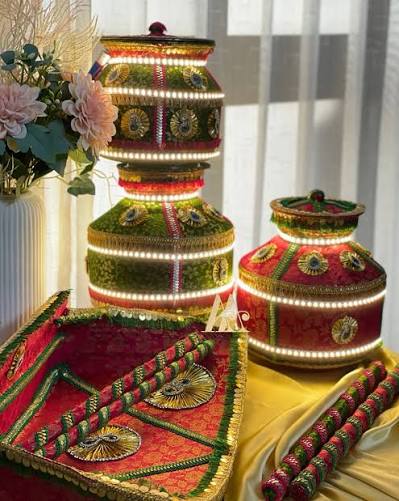
The Jaggo ceremony is centred around a decorated pot (matki or gagar) with lights or diyas. This pot is traditionally carried on the head by a female family member, often an aunt or elder.
As she dances with the decorated matki, other family members join in with gidda and bhangra, creating a vibrant and festive atmosphere.
In some cases, the group moves through the neighbourhood, singing and dancing, symbolically inviting others to join the celebration.
Cultural Significance
Jaggo represents more than just celebration. It reflects the collective spirit of Punjabi culture:
- It serves as a joyful announcement of the wedding
- It brings together family, friends, and the wider community
- It symbolises energy, positivity, and shared happiness
Traditionally, it was also a way to involve neighbours and spread the festive mood beyond the household.
The Jaggo Ceremony
The ceremony typically follows this sequence:
- Family members gather at night
- The matki is decorated with lights, flowers, or ornaments
- A woman balances the matki on her head and begins dancing
- Gidda and bhangra are performed by the group
- Traditional songs and boliyaan are sung
- The group may move outside to continue the celebration
The atmosphere is energetic, informal, and highly interactive.
Historical Context
In earlier times, before widespread electricity, diyas were placed inside the matki to create light during night celebrations.
The concept of “Jaggo” also had a practical purpose — it was a way of informing the community about the wedding by gathering attention through music and movement.
Modern Practices
Today, Jaggo celebrations have evolved in style:
- Use of LED lights instead of diyas
- DJ music and amplified sound systems
- Choreographed dance performances
- Celebration in wedding venues instead of streets
Despite these changes, the core elements of gidda, boliyaan, and community participation remain central to the tradition.
Frequently Asked Questions
What is the Jaggo ceremony?
Jaggo is a Punjabi pre-wedding celebration involving night-time dancing, singing, and community participation.
When is Jaggo performed?
It is usually held one ot two nights before the wedding.
Why is a decorated matki used in Jaggo?
The matki, traditionally filled with diyas, symbolises light, celebration, and the announcement of the wedding.
Who participates in Jaggo?
Family members, relatives, and friends all take part in the celebration.
Is Jaggo only performed by the bride’s family?
Traditionally, it wasassociated with the bride’s side, but nowadays both groom and bride side celebrate it.
What is the difference between Jaggo and Ghadoli?
Jaggo is a noisy, night-long party aimed at celebrating and announcing the upcoming wedding, while Ghadoli is a serene, sacred ritual involving water from a Gurudwara or Temple to purify the bride or groom.
Nowadays mostly famileies combine both Jaggo and Ghadoli into a single event where they bring the sacred water from nearby Gurudwara or Temple, accompanied with Dhol and dance, usually followed by Sangeet/DJ night.
2 thoughts on “Jaggo Ceremony in Punjabi Wedding: Meaning, Ritual & Significance”
Comments are closed.