
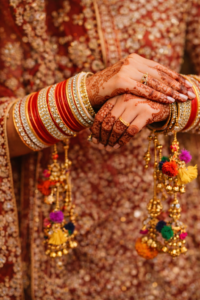
Chooda | ਚੂੜਾ | चूड़ा
A set of auspicious red and white bangles gifted by the maternal uncle (Mama), blessed in milk and worn by the Punjabi bride for marital bliss.
Introduction
The chooda is an essential Punjabi wedding tradition in which the bride wears a set of red and white bangles. It is not just a piece of jewellery, but a sacred symbol of new beginnings, blessings, and emotional connection with her maternal family (Maayka). The ceremony marks the transition of the bride into a new phase of life and holds deep cultural significance in Punjabi weddings.The Chooda Ceremony
The ceremony takes place on the morning of the wedding day or the preceding evening. Before the bangles are worn, they are traditionally cleansed in a bowl of milk and rosewater (Kachi Lassi) to purify them. The bride’s eyes are covered with a dupatta, symbolising stepping into her new married destiny with complete faith and trust. The bride’s maternal uncle (Mama) and aunt (Mami) then lovingly place the chooda onto her wrists, followed by prayers and blessings from all gathered relatives.Cultural Significance
The chooda carries multiple layers of meaning in Punjabi culture:- Red colour: Represents love, fertility, prosperity, and matrimonial passion.
- White/Ivory colour: Symbolises purity, peace, and auspicious new beginnings.
- Role of the Maternal Family: Highlights the lifelong emotional support and blessings of the bride’s maternal lineage.
- Protection: Traditionally believed to shield the bride from negative energy and bring good fortune to her new household.
Frequently Asked Questions
How long do brides traditionally wear the chooda?
Traditionally, brides wore the chooda for up to one year. In contemporary times, brides commonly wear it for 40 days to a few months depending on family custom and professional lifestyle.Who gifts the chooda to the bride?
The chooda is traditionally gifted and placed onto the bride’s wrists by her maternal uncle (Mama) and aunt (Mami).Why does the bride not look at the chooda during the ceremony?
The bride’s eyes are covered as a symbolic gesture of stepping into her new life with faith, without anxiety or preconceptions.Looking for an Authentic Bridal Chooda?
If you are preparing for the maternal blessing ceremony, you can explore traditional red & white Punjabi Bridal Chooda sets on Amazon ↗ or protective velvet Chooda cover bags ↗.