Introduction
Lohri is one of the most eagerly anticipated winter festivals of Punjab, celebrated every year on January 13th on the eve of Makar Sankranti. Marking the culmination of peak winter and the harvest of sugarcane, Lohri celebrates warmth, family, and agricultural thanksgiving.
The Bonfire & Ritual Offerings
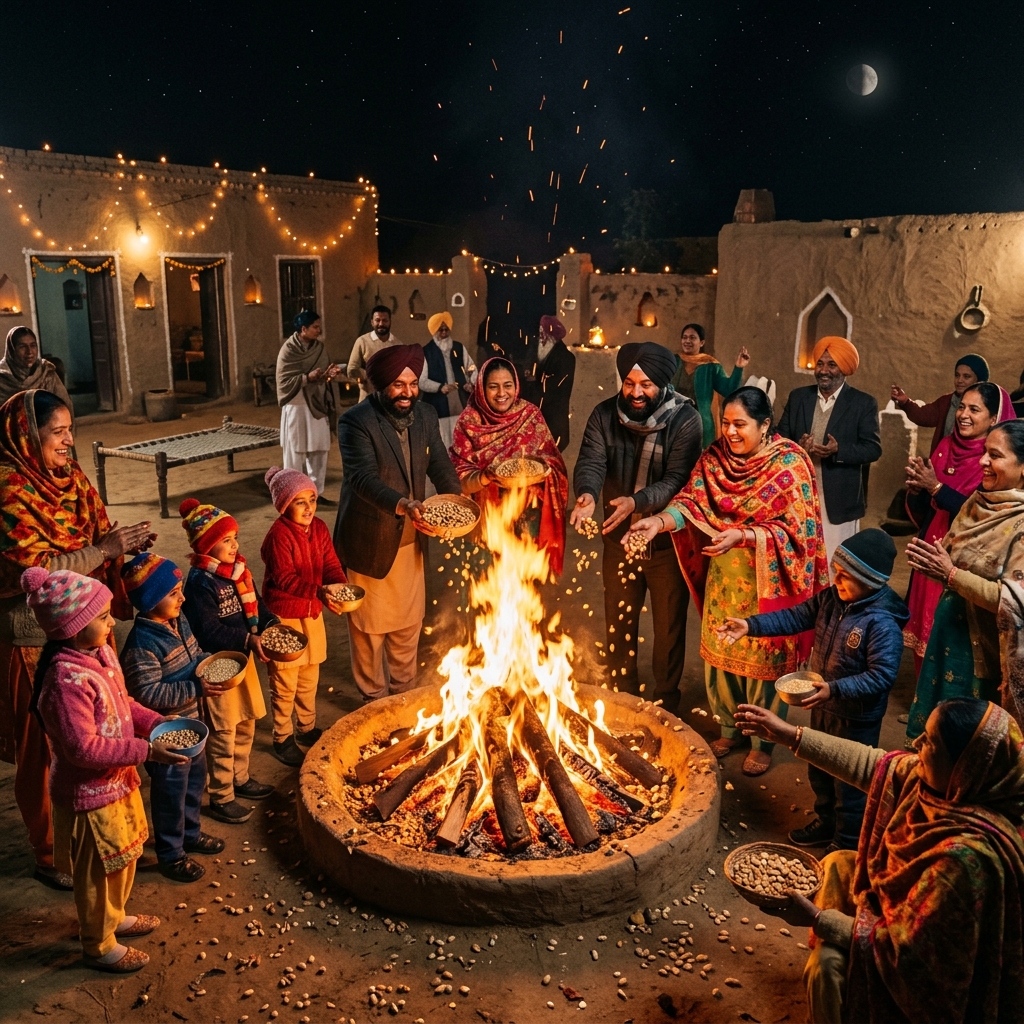
At sunset, families and communities gather around a large bonfire lit in open courtyards. Devotees circumambulate the sacred fire, tossing offerings of peanuts (moongphali), puffed rice (popcorn), sesame seeds (til), and rewri into the flames while saying, “Aadar aye te dilather jaye” (May honor arrive and poverty depart!).
The Legend of Dulla Bhatti
Children go door-to-door singing traditional Lohri folk songs and collecting gifts of sweets and coins. The most famous song pays tribute to Dulla Bhatti, a legendary Punjabi folk hero during Akbar’s reign who rescued kidnapped girls from slave markets and arranged their marriages with honor.
Frequently Asked Questions
Why is Lohri celebrated on January 13th?
Lohri falls on the last day of the Punjabi month of Poh, marking the passing of the winter solstice and the harvest of sugarcane.
Why is a first Lohri special for newborns and newlyweds?
Lohri is considered a time of fertility and new beginnings; families celebrate a child’s or newlywed’s first Lohri with grand feasts and gifts.
What foods are traditionally associated with Lohri?
Makki di Roti with Sarson da Saag, rewri, gajak, roasted peanuts, and popcorn.