Introduction
Jaggo is one of the most vibrant, high-energy pre-wedding night traditions in Punjabi culture. Translating literally to “Wake up!”, the ceremony takes place the night before the wedding, filling the neighbourhood with infectious music, dance, and celebration.
The Jaggo Procession
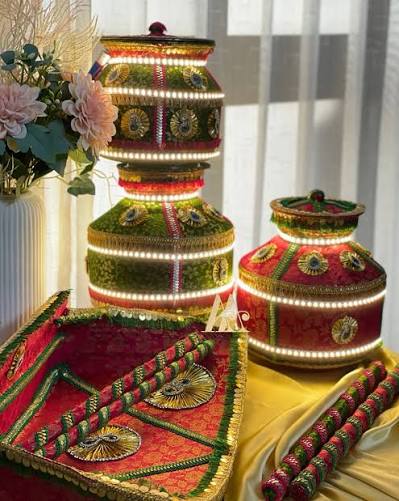
A decorated brass or copper pot (gaggar), adorned with illuminated oil lamps (diyas) or flickering candles, is balanced on the head of the maternal aunt (Mami). Guided by the maternal uncle (Mama) holding a decorated stick fitted with brass bells (chhaj), the family dances through the streets.
Relatives and neighbours are invited to come out of their homes, dance, and join in the wedding jubilation.
Jaggo Songs and Boliyan
Jaggo is accompanied by traditional witty boliyan, folk songs, and the pounding rhythm of the dhol. The songs playfully tease relatives, praise the bride and groom, and spread joyous celebration across the community.
Frequently Asked Questions
What does "Jaggo" literally mean?
Jaggo means “wake up” in Punjabi. In historic village times, the family walked through the village singing to awaken neighbors and invite them to wedding festivities.
Who carries the Jaggo on their head?
Traditionally, the bride or groom’s maternal aunt (Mami) dances carrying the lit Jaggo pot on her head.
What is the decorated stick used during Jaggo?
It is called a “Chhaj” or “Khanda stick”, adorned with colorful cloth and brass bells that jingle rhythmically as it is tapped on the ground.