
Introduction
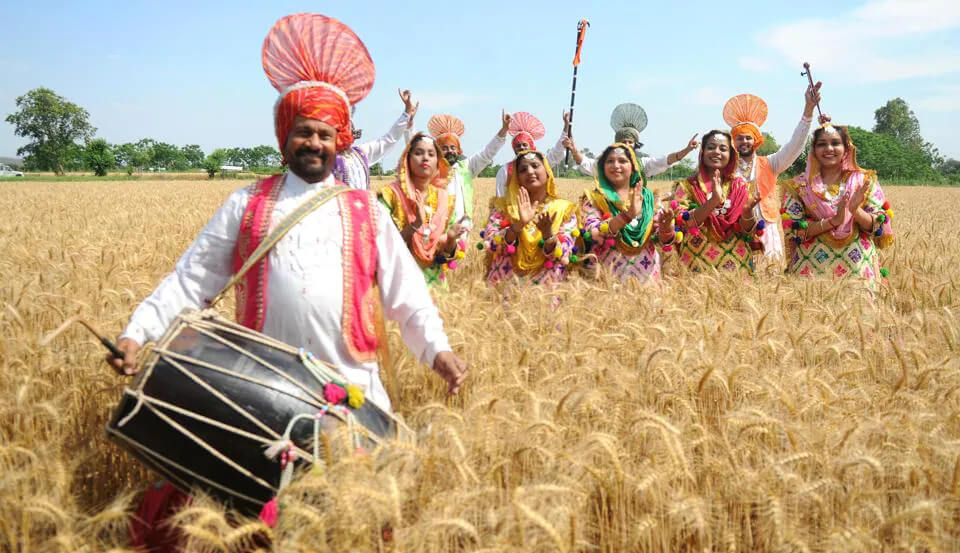
Vaisakhi (or Baisakhi) is the most monumental festival in Punjab, celebrated on April 13th or 14th each year. It serves a profound dual purpose: it is Punjab’s joyful harvest festival marking the reaping of the golden wheat crop, and the sacred anniversary of the creation of the Khalsa Panth in 1699.
Birth of the Khalsa (1699)
On Vaisakhi day in 1699 at Anandpur Sahib, Guru Gobind Singh Ji summoned a gathering of thousands and asked for volunteers ready to sacrifice their lives for righteousness. Five brave devotees — coming from different regions and social backgrounds — stepped forward.
Known as the Panj Pyare (Five Beloved Ones), they were initiated with sacred nectar (Amrit), creating the Khalsa — an egalitarian order committed to justice, courage, and spiritual discipline.
Celebrations in Punjab
Gurdwaras hold special services with continuous Kirtan and Langar. Huge Nagar Kirtan processions march through cities with colorful floats and Gatka martial displays. In rural Punjab, farmers celebrate their golden harvest with high-energy Bhangra and village fairs (Melas).
Frequently Asked Questions
What is the historical significance of Vaisakhi 1699?
Guru Gobind Singh Ji founded the Khalsa Panth at Anandpur Sahib, formalizing the Sikh identity and the code of the Five Ks (Panj Kakars).
What crop is harvested during Vaisakhi?
The golden Rabi wheat crop — the agricultural foundation of Punjab’s economy.
What takes place during a Vaisakhi Nagar Kirtan?
A grand street procession led by the Panj Pyare carrying the Sri Guru Granth Sahib Ji, with devotional singing, free food stalls, and Gatka demonstrations.