
Introduction
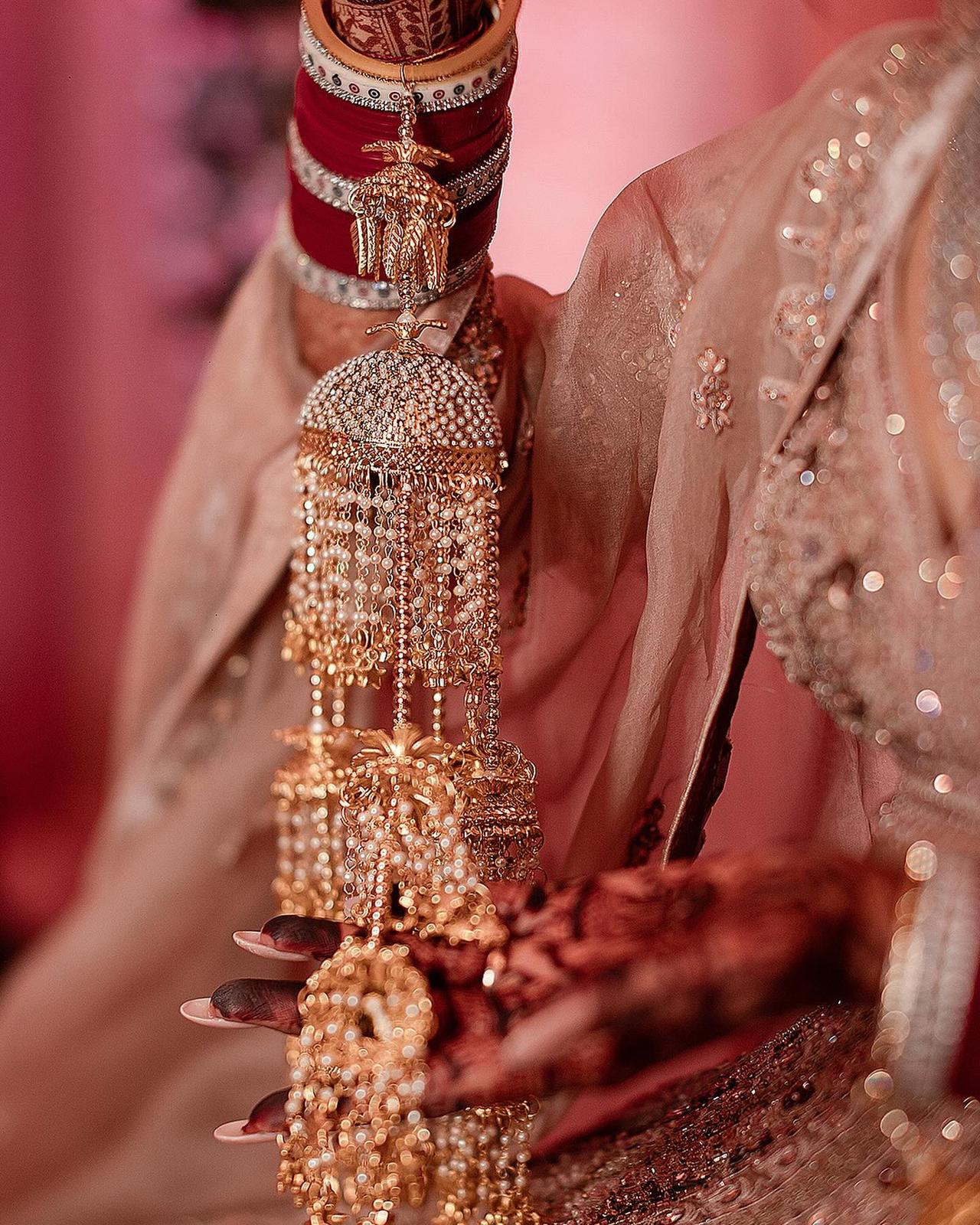
Kalire are exquisite umbrella-shaped golden ornaments that hang from a Punjabi bride’s chooda bangles. They are tied to the bride’s wrists on the wedding morning, adding a dazzling element of beauty and deep traditional meaning to her bridal ensemble.
The Kalire Ritual
The bride’s sisters, female cousins, and closest friends tie the kalire to her bangles with red and golden threads. As each relative ties a kalire, they whisper heartfelt prayers and blessings for her marital happiness and prosperity.
Following this, the playful “Kalire Dropping” ritual takes place: the bride shakes her hands over the heads of all unmarried girls in the family. If a part of the kalire falls on someone’s head, folklore says she is next in line to get married!
Historical Significance
Historically, kalire were crafted from dried coconuts (giri), betel nuts (supari), and dried fruits. When brides travelled long distances to their in-laws’ village in palanquins, the kalire provided non-perishable snack nourishment for the journey, ensuring the bride never arrived hungry.
Frequently Asked Questions
What is the meaning behind the Kalire dropping ritual?
The bride shakes her kalire over unmarried sisters and friends; if a leaf or piece drops onto someone, tradition holds she will be the next bride.
Who ties the kalire on the bride?
The bride’s sisters, female cousins, and closest friends tie the kalire to her chooda during the pre-wedding morning ceremonies.
What are modern kalire designs like?
Modern brides often customize kalire with engraved initials, love stories, miniature photos, floral tassels, and pastel metallic accents.