Introduction
Langar is the sacred Sikh community kitchen tradition where a free, wholesome meal is prepared and served to everyone without discrimination. Established by Guru Nanak Dev Ji in the 15th century, Langar is one of the world’s most enduring institutions of equality, hospitality, and selfless service (Seva).
Pangat and Sangat: Revolution of Equality
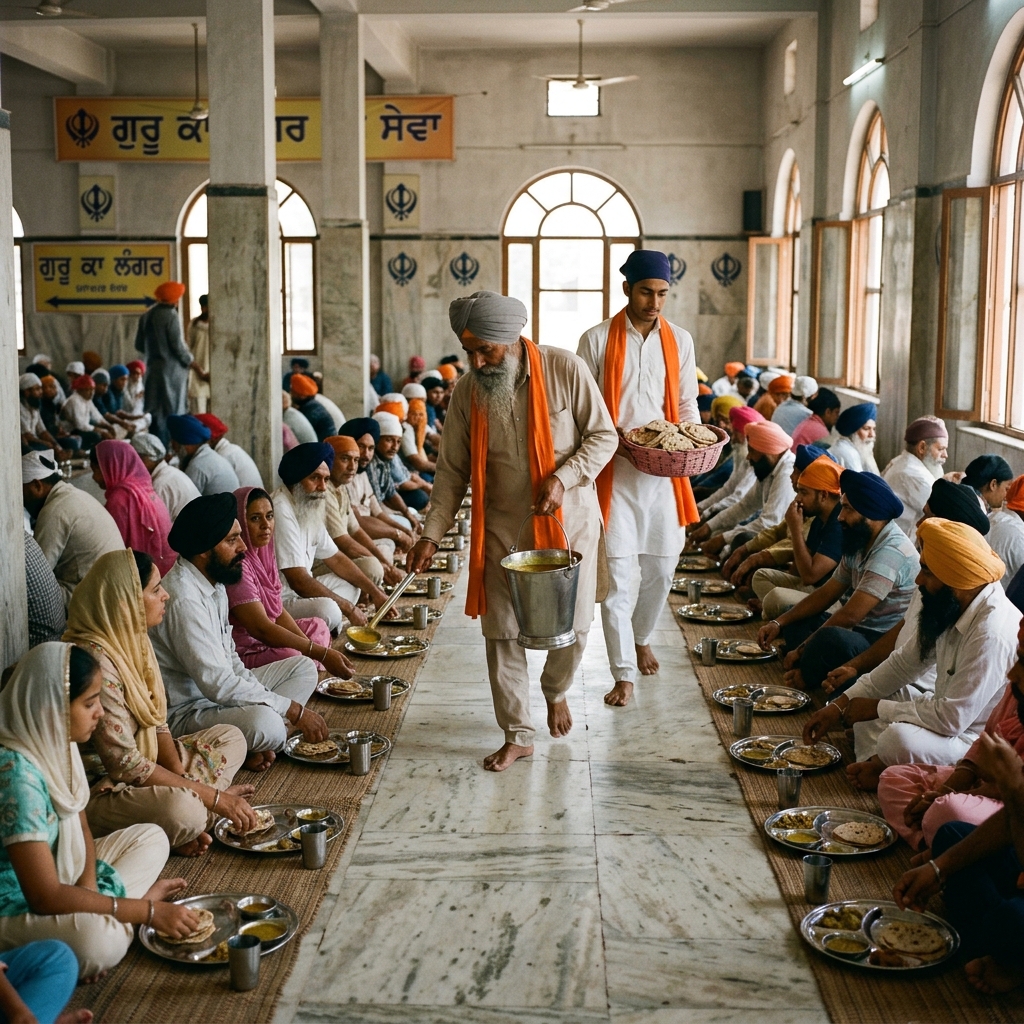
At a time when rigid caste hierarchies dictated who could touch, cook, or eat food together, the Sikh Gurus mandated that all visitors — from emperors like Akbar to the humblest laborer — sit side-by-side in a straight row (Pangat) on the floor and share the exact same simple food as equals.
Volunteer Service (Seva)
Langar is run entirely through voluntary donations and the selfless service of volunteers (Sevadars). From washing dishes and kneading dough to cooking lentils and serving food, Seva is considered a supreme act of devotion and humility.
Langar is always strictly vegetarian to ensure that people of all faiths and dietary beliefs can eat together freely without religious restriction.
Frequently Asked Questions
Why is Langar always vegetarian?
Langar is vegetarian so that people of any religion, caste, and dietary discipline can eat together without compromising their personal beliefs.
Who founded the tradition of Langar?
Guru Nanak Dev Ji, the first Sikh Guru, founded Langar to eliminate caste prejudice and ensure no one in the community went hungry.
How many people eat Langar at the Golden Temple every day?
The Golden Temple in Amritsar serves free hot meals to upwards of 100,000 pilgrims every single day, making it the largest free kitchen in the world.