
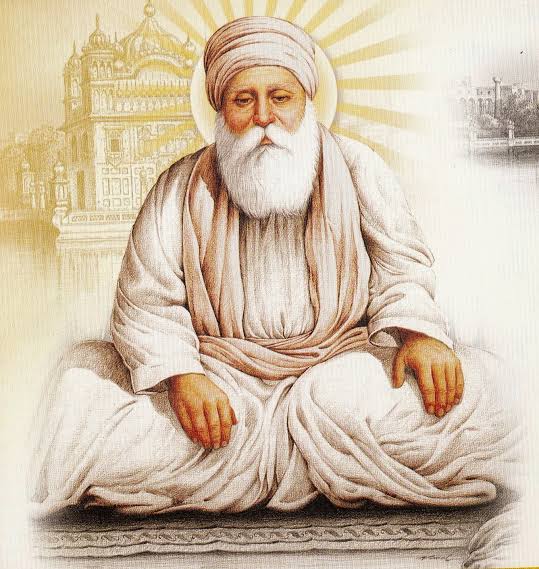
Introduction
Guru Amar Das Ji (1479–1574) assumed the mantle of Guruship at the age of 73, demonstrating extraordinary humility, tireless seva, and profound social reform. He established the spiritual town of Goindval Sahib on the banks of the Beas River.
“Pangat Pehlan Te Sangat Pachhey”
Guru Amar Das Ji instituted the strict egalitarian rule: “Pangat Pehlan Te Sangat Pachhey” (First sit in the communal dining row and eat Langar together, only then join the spiritual congregation). When Emperor Akbar visited the Guru at Goindval Sahib, even the Emperor sat on the floor as an ordinary devotee before meeting the Guru.
Revolutionary Women’s Rights Reforms
Guru Amar Das Ji was a visionary social reformer who fiercely prohibited the barbaric medieval practices of Sati (burning widows on funeral pyres) and Purdah (mandatory face veiling of women). He encouraged widow remarriage and appointed women as spiritual leaders (Masands) across different territories.
The Sacred Baoli Sahib of Goindval
Guru Amar Das Ji constructed the historic stepwell (Baoli) with 84 steps at Goindval Sahib, creating a universal pilgrimage place open to people of all castes for spiritual purification and reflection.
Frequently Asked Questions
What does "Pangat Pehlan Te Sangat Pachhey" mean?
It means that all visitors must first partake in the egalitarian community meal (Langar) before meeting the Guru or entering the congregation.
How did Guru Amar Das Ji reform women's rights?
He abolished the Sati practice, eradicated the Purdah face veil, supported widow remarriage, and appointed women as regional spiritual leaders.
What is the Baoli Sahib at Goindval?
It is a sacred stepwell with 84 steps constructed by Guru Amar Das Ji, symbolizing liberation from the cycle of 84 lakh lifeforms.
Which famous prayer was composed by Guru Amar Das Ji?
Anand Sahib, the "Song of Eternal Bliss" in Raag Ramkali, was composed by Guru Amar Das Ji.