Ghadoli | ਘੜੋਲੀ | घड़ोली
A pre-wedding ritual in Punjabi traditions where water is brought in a decorated vessel for the ceremonial cleansing of the bride or groom.
Introduction
Ghadoli (also known as Gharoli) is an important pre-wedding ritual in Punjabi weddings. It is performed at both the bride’s and groom’s homes, usually before the Haldi (Vatna) ceremony.
The ritual centres around water, which symbolises purification, preparation, and the beginning of a new phase of life.
What Is Ghadoli?
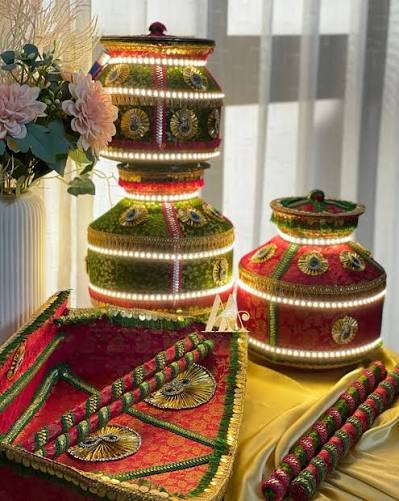
Ghadoli is a tradition in which a decorated vessel—made of metal or earthen material—is used to bring water for the ceremonial bath of the bride or groom. The ritual is usually performed by close female relatives, often a sister or sister-in-law (bhabi). Most families bring water from a nearby Gurudwara or Temple.
The act of bringing water is accompanied by traditional songs (boliyan), creating a festive and collective atmosphere.
Cultural Significance
Ghadoli reflects deeper meanings within Punjabi culture:
- Water symbolises purification and renewal
- The ritual marks the transition into married life
- It represents family involvement in preparing the bride or groom
- It reflects simplicity and connection with traditional practices
The ceremony signifies leaving behind the past and entering a new, blessed stage of life.
The Ghadoli Ceremony
The ceremony typically follows these steps:
- A suitable time is chosen, often in evening 1-2 days prior to the wedding
- A sister, bhabhi, or female relative brings the decorated vessel
- Traditional songs are sung during the process
- The vessel (ghadoli) is carried and brought into the home
- The water is placed and sometimes decorated further
- The bride or groom is bathed using this water
- Family members gather at night
The atmosphere is energetic, informal, and highly interactive.
The Ghadoli Vessel
The vessel used in this ritual is often:
- Made of stainless steel, brass, or clay
- Decorated with fabric, gota, lace, mirrors, or beads
- Prepared in a way that reflects celebration and tradition
The decoration adds a visual and cultural element to the ritual, making it a recognisable part of Punjabi weddings.
Historical Context
In earlier times, water from wells, rivers, or natural sources was considered pure and essential for important rituals.
Before modern water systems, collecting water was itself a meaningful activity. Over time, this practical act evolved into a symbolic tradition that continues today.
Modern Practices
Today, the Ghadoli ritual has adapted to changing lifestyles:
- Water may be taken from within the home if no Gurudwara or Temple in vicinity.
- The ceremony may be more symbolic than practical
- Decorations and presentation have become more elaborate
- It is often included as part of wedding photography and documentation
Despite these changes, the core meaning of purification and preparation remains unchanged.
Frequently Asked Questions
What is the Ghadoli ceremony?
Ghadoli is a Punjabi pre-wedding ritual where water is brought in a decorated vessel and used for the ceremonial bath of the bride or groom.
Where is the water brought from?
Traditionally from wells or natural sources. Today, it is mostly taken from nearby Gurudwara or Temple and may also be taken from within the home if no Gurudwara or Temple in vicinity.
Who performs the Ghadoli ritual?
Usually a close female relative – sister or sister-in-law(bhabhi).
Is Ghadoli performed for both bride and groom?
Yes, it is usually performed by both bride and groom side.
What does the ritual symbolise?
It symbolises purification, preparation and the beginning of a new life phase.