Haldi | ਹਲਦੀ | हल्दी
A pre-wedding ritual where turmeric paste is applied to the bride and groom as part of preparation for marriage.
Introduction
The Haldi ceremony is one of the most joyful and meaningful pre-wedding rituals in Punjabi weddings. It is usually performed one or two days before the wedding at both the bride’s and groom’s homes.
In this ceremony, a turmeric-based paste is applied to the bride and groom by family members. The ritual symbolises purification, preparation, and the beginning of a new phase of life.
What Is Haldi?
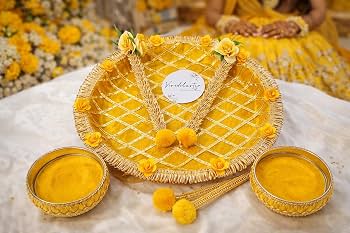
The Haldi ceremony involves applying a paste—commonly known as vatna—made from turmeric, gram flour (besan), and curd. Close family members and relatives apply this paste to the face, hands, and feet of the bride or groom. The ceremony takes place in a relaxed and celebratory environment, often with traditional songs, laughter, and music.
The Haldi ritual marks the beginning of the final phase of wedding preparations and brings together family members in a shared moment of joy.
Cultural Significance
The Haldi ceremony carries symbolic meaning within Punjabi culture:
- Purification – Turmeric is traditionally associated with cleansing and preparation
- Auspiciousness – The yellow colour represents positivity and a शुभ beginning
- Preparation – It marks readiness for marriage, both physically and emotionally
- Blessings – Family participation reflects love, support, and good wishes
The ritual reflects warmth, bonding, and collective celebration within the family.
Ritual Process
The Haldi ceremony typically follows these steps:
- The vatna (haldi paste) is prepared
- The bride or groom is seated on a low stool (peedhi)
- Close family members apply haldi first
- Other relatives and friends participate
- Traditional songs are sung and dholak is played
- A ritual bath usually follows
Historical Context
Turmeric has been used in Indian traditions for centuries, especially in Ayurvedic practices, due to its cleansing and protective properties.
In Punjabi weddings, the Haldi ceremony is part of the Maiyan phase, which represents purification and preparation before marriage.
Modern Practices
Today, the Haldi ceremony has evolved in presentation:
- Yellow-themed decorations
- Floral jewellery for the bride and groom
- Organised setups for photography
- Participation of friends along with family
While the visual style has become more elaborate, the core ritual of applying haldi and sharing blessings remains unchanged.
Frequently Asked Questions
What is the Haldi ceremony?
The Haldi ceremony is a Punjabi pre-wedding ritual where a turmeric-based paste is applied to the bride and groom.
When is the Haldi ceremony performed?
It is usually held one or two days before the wedding.
What is used in the Haldi paste?
The paste, known as vatna, is typically made of turmeric, gram flour (besan), and curd.
Is Haldi performed for both bride and groom?
Yes, the ceremony takes place separately at both homes.
Why is turmeric used in the ritual?
Turmeric is traditionally associated with purification, preparation, and positivity.
What happens after the Haldi ceremony?
A ritual bath is usually performed, followed by other wedding ceremonies.