
Introduction
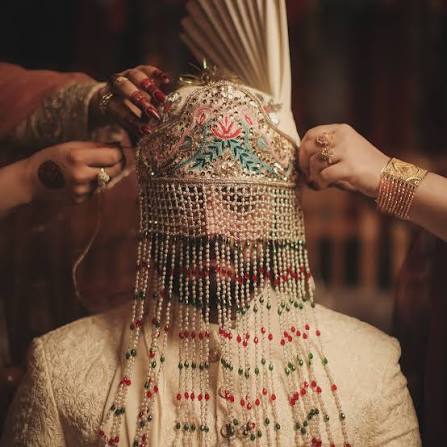
Sehra Bandi is an emotional and auspicious pre-wedding ritual in Punjabi weddings. Held at the groom’s home right before the wedding procession (Baraat) departs, it involves tying the Sehra — a decorative veil made of fresh flowers, pearls, or golden beads — onto the groom’s turban (Pagri).
The Ceremony and Sister’s Role
The ceremony is traditionally performed by the groom’s sisters and female cousins. As they tie the Sehra, an elder performs a short prayer. The sisters sing traditional Sehra songs praising the groom’s noble character, honoring the family heritage, and invoking blessings for his married life.
In return for tying the veil and applying kohl (surma) to protect the groom from the evil eye, the sisters receive a cash gift or shagun from their brother.
Cultural Symbolism
The Sehra elevates the groom to the status of a king on his wedding day, while practically and symbolically shielding his face from envy and negative energies as he travels to the wedding venue.
Frequently Asked Questions
Who ties the Sehra on the groom?
The groom’s sisters or female cousins tie the Sehra on his turban and receive a special token gift (shagun) in return.
What is the Surma ritual during Sehra Bandi?
The groom’s sister-in-law (Bhabhi) applies a stroke of black kohl (surma) to his eyes to ward off the evil eye (buri nazar).
What materials are used in making a Sehra?
Traditional Sehras are made with fragrant fresh flowers like jasmine and marigold, while modern designs incorporate pearls, gold thread, and gemstones.