Introduction
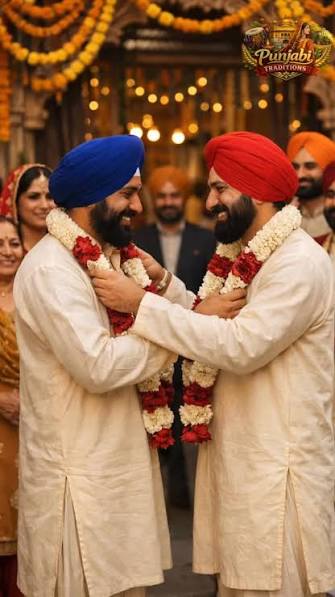
Milni, which literally means “meeting” or “unification”, is the formal welcoming ceremony that takes place when the groom’s wedding procession (Baraat) arrives at the wedding venue. It is the ceremony that publicly unites the two extended families into one shared kinship.
How Milni is Performed
During Milni, male and female relatives from both sides are introduced pair-by-pair in order of generational seniority:
- Grandfathers meet Grandfathers
- Fathers meet Fathers
- Maternal Uncles (Mamas) meet Maternal Uncles
- Paternal Uncles (Chachas / Taayas) meet Paternal Uncles
- Brothers meet Brothers and Cousins meet Cousins
Each pair exchanges floral garlands (marmalas), embraces warmly with joy, and the bride’s family presents traditional cash blessings (shagun) and gifts to the groom’s relatives.
Cultural Significance
In Punjabi culture, marriage represents the union of two entire families, not just two individuals. The Milni establishes mutual respect, warmth, and lifelong familial bonds from the very first greeting.
Frequently Asked Questions
Who participates in the Milni ceremony?
Corresponding relatives from both families matched by relationship (fathers meet fathers, uncles meet uncles, brothers meet brothers).
What items are exchanged in Milni?
Fresh floral garlands, warm embraces, and traditional cash envelopes (shagun) or woolen blankets/shawls.
Why is Milni considered so important?
It publicly establishes kinship and mutual honor between both families, setting a tone of warmth and hospitality for the entire wedding.