Introduction
Vidaai (also known as Doli) is the emotional culmination of a Punjabi wedding. It marks the poignant moment when the newly married bride bids farewell to her parents, siblings, and childhood home to embark on her new life with her husband and in-laws.
The Throwing of Puffed Rice (Phuliyan / Khillan)
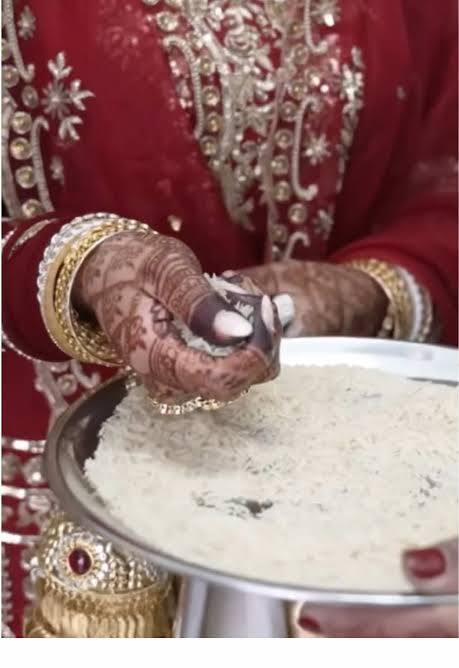
As the bride walks out of her parental home or wedding hall, her mother and female relatives walk beside her. The bride scoops handfuls of puffed rice or rice grains (khillan) and tosses them backward over her head three or five times without looking back.
This gesture carries profound symbolic meaning: it signifies that she is repaying her parents for everything they have provided her, wishing endless prosperity upon her maternal home (Maayka), and praying that wealth and happiness continue to flourish in the home she grew up in.
The Doli Departure
Historically, the bride was carried in an ornate wooden palanquin (Doli) lifted by her brothers and uncles. In modern celebrations, the couple departs in a decorated car. The emotional embraces between the bride and her parents represent the timeless bond between a daughter and her family.
Frequently Asked Questions
Why does the bride throw rice during Vidaai?
Tossing rice over her head symbolizes repaying her parents for her upbringing and praying for lifelong abundance, peace, and prosperity in her childhood home.
Why does the bride not look back as she walks away?
Not looking back symbolizes that she is stepping into her new future with determination and full commitment to her new household.
What is a Doli?
A Doli was historically an ornate wooden palanquin used to transport the bride to her in-laws’ home; today it represents the bride’s formal vehicle departure.