Introduction
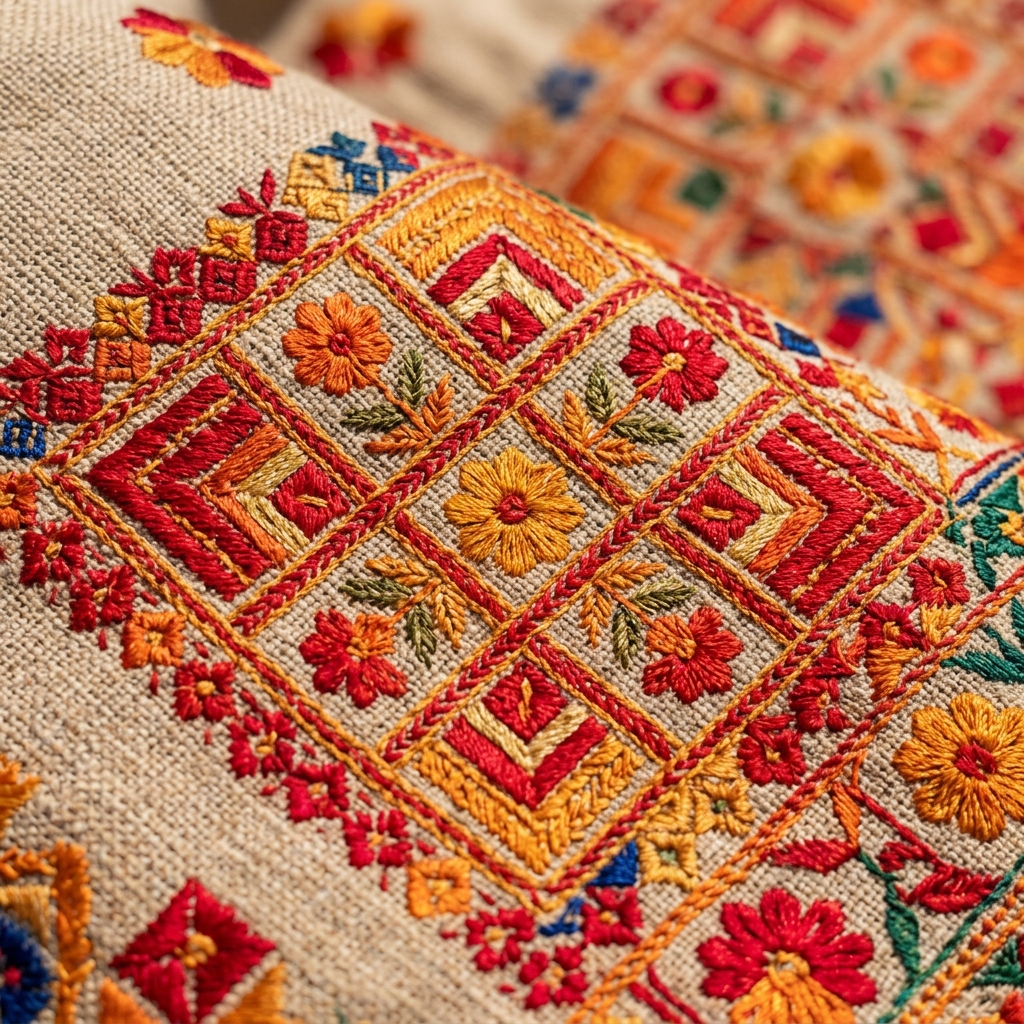
Phulkari, which translates poetically to “flower work”, is the world-renowned folk embroidery art of Punjab. Passed down from grandmothers and mothers to daughters for generations, Phulkari shawls and dupattas represent Punjabi feminine creativity, emotional warmth, and cultural pride.
The Craft and Technique
Authentic Phulkari is embroidered entirely by hand on homespun, hand-dyed cotton fabric known as khaddar. Artisans use vibrant, untwisted silk floss threads called Pat. Uniquely, the entire embroidery is worked from the reverse (back) side of the fabric using pure darning stitches, requiring master spatial calculation to form dazzling geometric, floral, and village life motifs on the front.
Types of Phulkari
- Bagh (“Garden”): An exquisite masterpiece where the embroidery is so dense that not an inch of the base cloth is visible.
- Chope: A red shawl with golden-yellow borders, traditionally gifted by the maternal grandmother (Nani) to the bride.
- Darshan Dwar: Architectural gate motifs made as devotional offerings for Gurdwaras and shrines.
- Sainchi: Depicts everyday Punjabi rural scenes — birds, animals, dancers, and bullock carts.
Frequently Asked Questions
What does the word "Phulkari" mean?
Phulkari translates to “flower craft” (Phul = flower, Kari = work or craftsmanship).
What stitch is used in traditional Phulkari?
The darning stitch, worked from the reverse side of the fabric using vibrant silk floss thread (Pat).
Does Phulkari have Geographical Indication (GI) status?
Yes, authentic Phulkari has been granted Geographical Indication (GI) status by the Government of India, protecting Punjab’s artisanal heritage.