Introduction
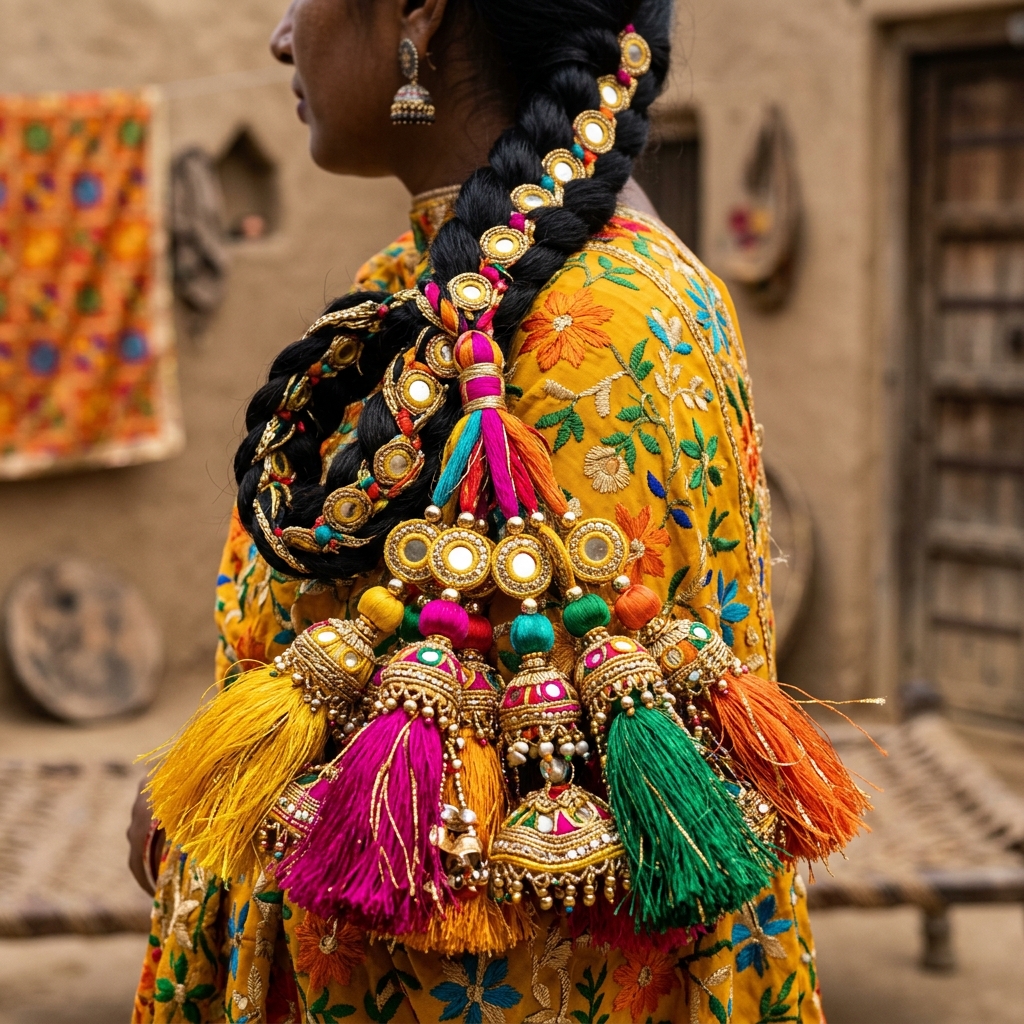
A Parandi (also spelled Paranda) is an iconic traditional hair adornment woven into the braided hair (gutt) of Punjabi women. Characterized by colorful silk threads, golden zari embellishments, mirrors, and swaying tassels, the Parandi is an enduring symbol of Punjabi femininity and graceful celebration.
How a Parandi is Worn
The Parandi is braided directly into the three strands of a woman’s plait, beginning near the nape of the neck. It extends past the natural length of the hair, giving the braid a fuller, longer, and more striking appearance, with elaborate tassels swaying rhythmically at the bottom as the wearer walks or dances.
Significance in Folk Music & Giddha
The Parandi is immortalized in Punjabi folk poetry, romantic couplets (boliyan), and Giddha songs. During festive dances, the swaying of the colorful Parandi accents the dancer’s graceful movements, celebrating vitality and pride.
Frequently Asked Questions
How is a Parandi tied into hair?
It is braided into the three sections of the natural hair plait starting from the base of the neck, extending into long decorative tassels.
What materials are used to make Parandis?
Silk and cotton threads, gold zari cords, beads, tiny mirrors, and colorful hanging wool tassels.
On what occasions is a Parandi worn?
Widely worn at weddings, Vaisakhi celebrations, Teeyan monsoon festivals, and Giddha folk dance performances.