Introduction
Bhangra is the world-famous folk dance and music genre of Punjab. Born in the fertile fields of Punjab as a harvest celebration, Bhangra has evolved into a global cultural phenomenon that symbolizes infectious joy, athletic strength, and Punjabi pride.
Origins and the Rhythm of Dhol
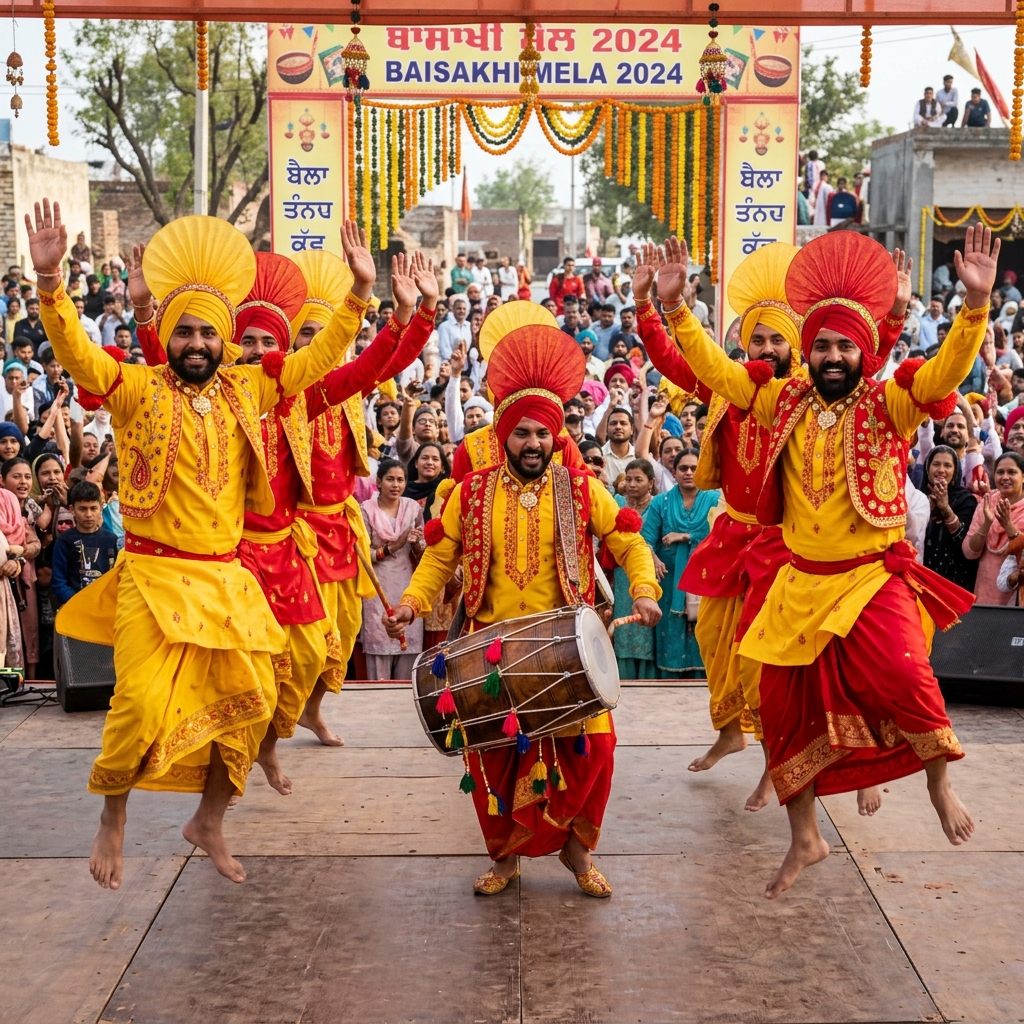
Bhangra was traditionally performed by Punjabi farmers during the spring harvest festival of Vaisakhi. After months of hard labor, farmers danced to celebrate the golden wheat harvest. The dance is anchored by the rhythmic, thunderous beat of the Dhol drum, accompanied by the high-pitched twang of the single-stringed Tumbi and the sharp clatter of the Chimta.
Attire and Iconic Moves
Bhangra dancers wear vibrant silk kurtas, lungi/chadra wraps, matching turbans with elaborate fan crests (Turla), and embroidered waistcoats (Wasket). Signature dance movements include vigorous shoulder shrugs, high kicks, aerial jumps, and rhythmic clapping accompanied by shouted verses called Boliyan.
Frequently Asked Questions
Where did Bhangra originate?
Bhangra originated in the Majha and central agricultural plains of Punjab as a harvest celebration dance during Vaisakhi.
What instruments are used in authentic Bhangra music?
The Dhol (barrel drum), Tumbi (single string instrument), Chimta (iron tongs with jingles), Algoze (double flute), and Dhad.
What is a "Turla" in Bhangra attire?
A Turla is the stiff, fan-like pleated crest standing tall atop the dancer’s turban, swaying with every jump.