
Introduction
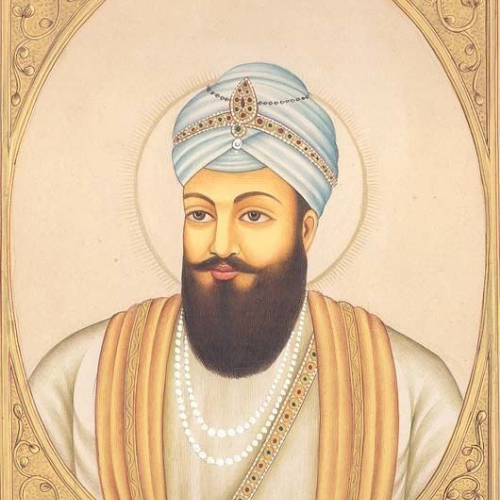
Guru Hargobind Ji (1595–1644) was the sixth Sikh Guru, transforming the Sikh community into Saint-Soldiers (Sant-Sipahi) capable of defending righteousness and justice against state tyranny following the martyrdom of his father, Guru Arjan Dev Ji.
The Doctrine of Miri and Piri
At his investiture ceremony, Guru Hargobind Ji wore two distinct swords:
- Miri: Representing temporal sovereignty, political freedom, and defense of the defenseless.
- Piri: Representing spiritual authority, divine wisdom, and inner purity.
Establishment of the Akal Takht (1606)
In 1606, Guru Hargobind Ji constructed the Sri Akal Takht Sahib (“Throne of the Timeless One”) directly facing Harmandir Sahib in Amritsar. It became the supreme seat of justice, moral guidance, and political sovereignty for the Sikh Nation.
Bandi Chhor Divas: The Great Liberation
Imprisoned at Gwalior Fort by Emperor Jahangir, Guru Hargobind Ji refused release unless 52 innocent Hindu kings and rajas held captive were also freed. On Diwali, he walked out of the fortress with all 52 kings holding onto the 52 tassels of his specially stitched royal cloak, celebrated forever as Bandi Chhor Divas.
Frequently Asked Questions
What do the swords of Miri and Piri represent?
Miri represents temporal justice and self-defense, while Piri represents spiritual wisdom and devotion.
What is the Akal Takht?
The Akal Takht is the highest seat of temporal authority in Sikhism, established by Guru Hargobind Ji in 1606 in Amritsar.
Why is Bandi Chhor Divas celebrated?
It celebrates Guru Hargobind Ji's release from Gwalior Fort and his heroic liberation of 52 innocent captive kings.
What martial tradition did Guru Hargobind Ji introduce?
He introduced martial training, Gatka swordplay, horsemanship, and heroic ballad singing (Dhadis) at the Akal Takht.